New Code Sent!

A guide to making pizza at home
The scent of fresh-baked pizza wafting through your kitchen can help transform your home into your favourite pizzeria. Making pizza at home creates a memorable meal but also an opportunity to explore flavours, techniques and creative topping combinations while bringing your family together for an enjoyable, rewarding experience.


Why make pizza at home
Making pizza at home turns a simple process into a creative culinary journey. Best of all, it invites exploration—from preparing dough to choosing toppings—that reflect your personality and tastes. Homemade pizza lets you craft something special from scratch, and offers control, quality, freshness and ingredient combinations that enhance every bite.


Essentials for pizza-making
Before starting, have the right tools and ingredients ready to go. Pizza recipes may vary, but having certain essentials on hand provides a good starting point before you let your creativity take over.
Pantry staples
Keep these ingredients in your pantry, so you can enjoy a pizza night whenever your family wants:
Yeast: Active dry yeast or instant yeast is an essential part of making the dough.
Flour: All-purpose flour is versatile, but bread flour or 00 flour can produce various crust textures.
Olive Oil: High-quality olive oil is a must as it adds flavour and also helps the dough stretch as needed.
Tomatoes: Canned tomatoes are all you need as the basis for a rich, delicious sauce.
Kitchen tools for pizza
Owning the right tools can streamline the pizza-making process:
Pizza Peel: Helps you transfer your creation into the oven with ease.
Pizza Stone: Great for getting a crispy bottom crust that everyone loves.
Bowls: You’ll need bowls of various sizes for mixing
- Stand Mixer: A dough hook can make mixing a much simpler task


How to make pizza dough
Crust is the foundation of any great pizza, even more important than cheese and sauce. To make a pizza dough, you will need four simple ingredients:
- Flour
- Water
- Yeast
- Salt
Ingredients
- 1 1/2 teaspoons honey
- 2 teaspoons olive oil
- 1 1/2 teaspoons kosher salt
- 2 1/2 cups bread flour
- 1 1/2 teaspoons active dry yeast
- 1 cup lukewarm water (35–37.8°C or 95-100°F)
- pizza toppings of your choice

Step 1: Make the yeast mixture
Combine honey, yeast and water in a small bowl. Let it stand 5 to 10 minutes or until it foams slightly.

Step 2: Mix dough
Add salt and flour to a stand mixer bowl with the dough hook attached. Then, mix on low for roughly 1 minute. Stop the mixer and add the yeast mixture you made during the first step. Now it’s time to increase the speed and knead for roughly 10 minutes or until you notice that the dough has become smooth and elastic. Lastly, divide the mixture into two balls of equal size.

Step 3: First rise
Grease two medium bowls with 1 teaspoon of olive oil and then place each dough ball in its own bowl. Cover each bowl with plastic wrap and let them rise in a warm place for roughly 1 to 2 hours or until each ball doubles in size.

Step 4: Second rise
Preheat the oven to 287.8°C (550°F). Punch down the dough to shape it into a ball, and then move it to a clean surface. Next, place a damp cloth over the dough to cover it. Finally, let it rest for 30 to 60 minutes or until they double in size.

Step 5: Bake
Stretch each dough ball into a 30.5 cm (12-inch) circle. Then, transfer them to baking sheets, and top each crust with tomato sauce, cheese and your favourite toppings. Bake for 10 to 15 minutes or until the cheese has melted and the crust has developed a nice brown colour. Remember to keep a close eye on the pizza as it cooks, so that it doesn’t burn.


Troubleshooting dough issues
Dough can be tricky, so issues may arise as you prepare it. If your dough springs back when stretching, you should let it rest for a few more minutes, as this will give the gluten more time to relax. If the dough tears, you may need to knead it some more or it might be too dry. Make sure to keep your proofing temperatures around 23.9°C (75°F), as this will help prevent yeast from becoming dormant or collapsing the entire structure.


How to make homemade pizza sauce
Unlike store-bought pizza sauces, which are often full of sugar and preservatives, homemade versions let you create a balance of acidity, saltiness and sweetness.
Every wonderful pizza sauce starts with high-quality tomatoes. Certain recipes offer a "quick-simmer" or "no-cook" method that aims to keep the flavours bright and fresh. Sure, the base is simple, but you can build on it with your preferred ingredients. One idea is to add a pinch of red pepper flakes for heat or fresh herbs, like oregano or basil, for an aromatic, earthy depth
Basic Pizza Sauce Ingredients
This classic recipe provides enough sauce to make about two large pizzas:
1 can (15 oz) crushed tomatoes
1 teaspoon dried oregano
½ teaspoon salt
1-2 cloves minced garlic
1 tablespoon olive oil
¼ teaspoon sugar (optional)
How to Make This Pizza Sauce Recipe

Step 1: Mix the ingredients
Combine the garlic, crushed tomatoes, olive oil, oregano, salt and sugar in a medium bowl or a small saucepan.

Step 2: Blend (Optional)
This step is only if you want a velvety smooth sauce. With an immersion blender or food processor, pulse the mixture until you achieve the consistency you want.

Step 3: Let it sit
If you don’t plan to cook the sauce, let it rest for a minimum of 30 minutes at room temperature. This will let the garlic and dried herbs infuse their flavour and aroma into the tomatoes.

Step 4: Simmer (Optional)
This is another optional step that you should only do if you want a thicker sauce with a deeper flavour. To do so, simmer the sauce on low heat for 15-20 minutes. Then, allow it to cool completely before spreading it over your dough.
Just because a red tomato base is the classic, and default, choice, doesn’t mean you can’t have some fun experimenting with alternative types of sauces. A herbaceous, vibrant pesto can add a punch of garlic and nuts, while a creamy béchamel or garlic cream sauce pairs beautifully with earthy mushrooms and spinach. If you’re up for something truly unique, use BBQ sauce or a simple drizzle of olive oil and garlic.


How to bake pizza in your oven
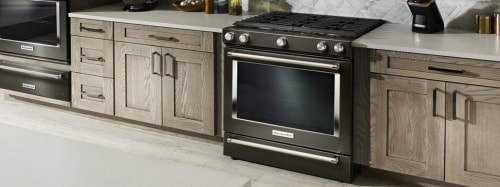
To ensure a delicious pizza crust forms, it’s recommended to use a preheated pizza stone or steel. Consult with your recipe first, but when it comes to heat settings, pizzas are usually cooked at high heat—typically 260°C (500°F) to 287.8°C (550°F)—to help get a crisp base and cooked toppings. Select KitchenAid® wall ovens like this model have Fresh Pizza Mode to help create restaurant-style pizzas right in your kitchen. Fresh pizza mode turns up the heat to 287.8°C (550°F) to deliver the delicious results your family will love.

Step 1: Preheat for precision
Place your pizza stone or steel on the middle rack at least 45-60 minutes prior to baking. Then, turn your oven to the desired temperature, which is typically 260°C (500°F) - 287.8°C (550°F).

Step 2: Get the pizza ready
As the oven heats up, place your room-temperature dough on parchment or a floured surface and stretch it. Then, have some fun arranging your toppings on the dough.

Step 3: Transfer
Carefully move the pizza (and parchment, if using) onto the hot stone or pizza steel using a sliding motion.

Step 4: Bake and monitor
Always follow your recipe, but most pizzas need to bake for roughly 8-12 minutes. Monitor the crust for when it turns a deep golden brown and the cheese blisters and bubbles.

Step 5: Let it rest
Take out the pizza and let it rest on a wire rack for a few minutes. During this time, the toppings should get firmer, which may help prevent them from slipping and sliding as you cut the pizza into slices.


Pizza stone vs. baking sheet vs. steel
Pizza stones, baking sheets, and steel are all strong choices to make homemade pizza, but they work in different ways.
A pizza stone is adept at absorbing and holding intense heat, drawing moisture out of the dough to help a crisp crust form. A baking sheet, on the other hand, is a convenient alternative that produces a softer, chewier base. The pizza steel works by transferring heat to the dough faster than a stone, giving the pizza that ultra-blistered finish. The decision typically comes down to the specific aesthetic and consistency you want.
The Pizza Stone (The Artisan’s Choice): A pizza stone is made of materials (ceramic or cordierite) designed to handle extreme temperatures. Since it is porous, it wicks moisture away from the bottom of the dough as it bakes, resulting in a beautifully charred bottom and an airy, open crumb.
The Pizza Steel (The Performance Powerhouse): If you want that "leopard-spotting" found in upscale pizzerias, then steel should be your choice. Since metal conducts heat better than stone, it delivers a massive "heat dump" into the dough the moment it hits the surface. Also, it is virtually indestructible and often develops a crisp crust quicker than a stone.
- The Baking Sheet (The Versatile Standard): While a baking sheet doesn't offer the same "bottom-up" heat blast as a stone, it still works quite well for Sicilian or “Grandma-style" pizza. Most baking sheets are made of a thin metal that heats up and cools down quickly, allowing for a more bread-like crust that’s surprisingly tender.


Pizza making tips and FAQs
Here are some common questions about pizza making at home and the answers that can help you master the art.
Do you need yeast to make pizza dough?
While yeast is the preferred method, you can use baking powder or baking soda to make a "quick bread" style dough. These agents react with heat and moisture to generate carbon dioxide, providing the crust with a soft or "cakier" lift.
Which flour is best for pizza dough?
Many consider 00 flour to be the gold standard for pizza because of its fine grind. That said, bread flour works well if you want a chewier crust, and all-purpose flour is also suitable.
Type 00 Flour (The Italian Classic):This powder-fine flour is often used in authentic Neapolitan pizza. It offers a mid-range protein content (usually around 11-12.5%) and typically produces a delicate crust with a beautiful "puff".
Bread Flour (The High-Protein Hero): With a protein content of 12-14%, bread flour usually offers a sturdier, chewier crust that won’t sag from a heavy amount of toppings. It’s actually the secret to that beloved New York-style slice.
All-Purpose Flour (The Reliable Backup): If your family’s in the mood for an impromptu pizza night, all-purpose flour will work just fine. It contains a lower protein content than bread flour, resulting in a slightly softer, more tender crust that can be less "rubbery" than high-protein alternatives.
How thin should pizza dough be?
The depth of the crust is all about personal preference. Thin crusts should be roughly 0.32 cm (1/8 inch) thick, whereas other styles, like deep dish, should be around 1.90 cm (3/4 inches). The trick is trying to maintain a consistent thickness for ideal baking.
What’s the best type of cheese for pizza?
Your cheese of choice is really your call. Low-moisture mozzarella is the classic option thanks to its melt and stretch. Fresh buffalo mozzarella offers an authentic, creamy finish. If you want a more complex flavour profile, you can layer in sharp provolone, nutty parmesan, or tangy goat cheese.
Let’s review the more popular cheese options for pizza.
Low-Moisture Mozzarella (The Classic): This is the one if you want that classic stretch. Since it has less water than fresh varieties, it browns and bubbles beautifully without making the crust soggy.
Fresh Mozzarella (The Neapolitan): Sold in brine or water, fresh mozzarella offers a milky and delicate texture and flavour. To achieve optimal results, slice it and then let it drain on paper towels before topping your pizza to avoid a "soupy" centre.
Aged Hard Cheeses: A final grating of aged Parmigiano-Reggiano over a pizza can enhance the entire pie. It preserves the cheese’s complex nutty notes that might otherwise be minimized or lost as it bakes in high-intensity heat.
Cheese Blends: To elevate your pizza into something more artisanal, use a carefully crafted "three-cheese blend" with provolone, Pecorino Romano and fontina. Provolone delivers a buttery sharpness, Pecorino Romano provides some saltiness, and Fontina has an exceptionally smooth melt that complements certain toppings like roasted vegetables.
Explore KitchenAid® wall ovens for pizza night
Select KitchenAid® wall ovens with Fresh Pizza Mode help you craft artisanal, restaurant-style pizzas without leaving your kitchen. Fresh pizza mode turns up the heat to 287.8°C (550°F) for delicious results. Select Kitchenaid® wall ovens also feature Even-Heat™ True Convection, with a heating element and fan that work together to circulate hot air throughout the entire oven, providing ideal temperatures to make delicious baked goods, succulent roasts and flavourful vegetables.
This article includes AI-generated content that our human team has reviewed and edited to ensure quality.
Get more inspiration for your kitchen
-
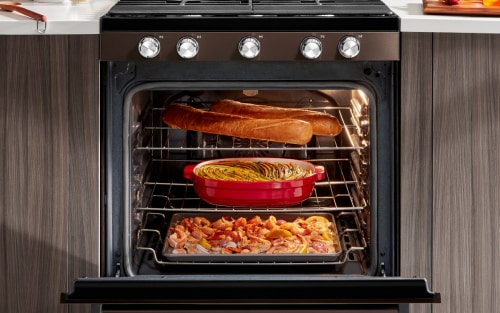 Tips to Maximize Oven Space and Cook Multiple Dishes Use this guide to maximize your oven space to cook multiple dishes at once. Make big family dinners and holiday cooking easier with these tips.
 -
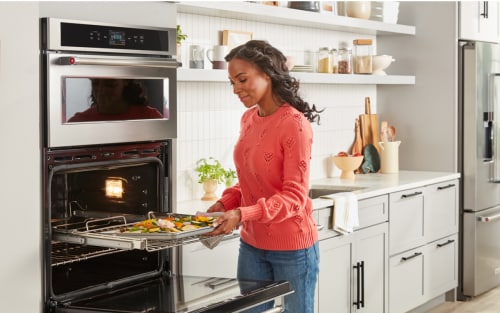 Oven Not Baking Evenly: Causes and Fixes If your oven isn't baking evenly, learn how to troubleshoot the issue. Discover possible solutions to help you get back to baking.
 -
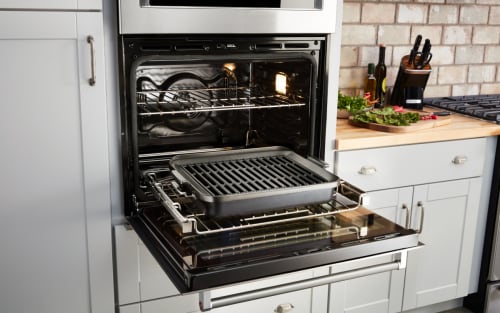 Do You Clean Your Oven Often Enough? Learn why deep cleaning your oven every three months can keep it performing as it should. Discover what you should use to clean your oven & more.
 -
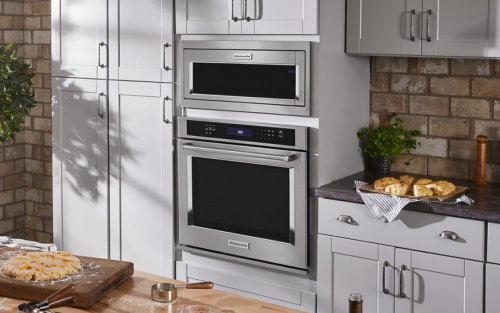 Understanding Ovens: How Different Types Cook Your Food Explore oven types, their cooking mechanisms, and settings to enhance your culinary skills and achieve delicious results in the kitchen.
 -
 4 Simple Steps to Effectively Clean Your Self-Cleaning Oven Explore our guide to using your self-cleaning oven, including tips, FAQs, and step-by-step instructions.
 -
 Ultimate Guide to Grinding Spices at Home for Peak Flavour Unlock fresh flavours with KitchenAid's guide on home grinding and toasting spices.